Thursday, 11 February 2016

New Forest Morning to Seaside Marshes Afternoon.

Wednesday 10th February Light NW Mostly Sunny

Goodbye to Kerry and Dominik, with a new addition to the Biking Birder family, an otter who fits in well with Sid the Frog.
Through Lyndhurst once more and along the A35, turning down a small road heading south. The road goes through a superb forest if tall redwoods and pines before I reach the entrance to the Blackwater Arboretum. A Hampshire birder had emailed me over this being a place where I could add lesser spotted woodpecker to the year list. Through the park and out the back to access a long bridleway, I walk slowly searching the tree tops after having hidden the bike in thick undergrowth.

There are only a very few birds; nuthatch and titmice. Then I hear it; the sound of a lesser spot' drumming. It is a short burst so much higher in tone than a great spotted woodpecker and unmistakable. I turn around to look in the direction of where I think the bird may be and find a tree to sit against and scan. With my thick waterproof trousers coming in handy, I sit on the leaf litter and wait. It drums again; three bursts in quick succession and now I can see it high in the canopy of an oak tree with some dead branches pointing skywards. I try to photograph it but can only get out of focus branches in shot. Two buzzards circle over and the diminutive woodpecker has gone. I sit for around another half hour in the hope that it would return. 

Two stock doves much in love flutter around the treetops, flying like slow butterflies in a display flight, a sight I hadn't seen too often before. Three treecreepers come close as do a couple of nuthatches but I have no more sightings of the lesser spotted woodpecker. I am thrilled to have seen it though as in 2010 I missed it altogether. Last year I only saw one, at Ynhs Hir RSPB reserve in Wales and now both times I have failed to get a photograph.
I go in search of another, walking the bridleways and through the forest along a large stream hoping that my luck will bring the bird. More treecreepers; they really are showing well today, and the occasional titmouse, particularly long-tailed but no more woodpeckers of any kind.
Back at the Arboretum, I sit for a spot of lunch, hot cross buns, bit of brie and an orange. Then I cycle along the lanes and byways to Keyhaven, past the high tower at Sway.
There has been a long-tailed duck reported here and I walk the bike along the sea wall to try and find it. The tide is as high as it can be be and the first road is flooded and blocked off. I meet an artist, Lesley Banks of Knightwood Photoart, who is sat photographing a nearby flock of brent geese. We chat for a while about her work before I head off once more eastwards along the sea wall.
Through Keyhaven harbour where little grebes and red-breasted mergansers are diving amongst the boats. I meet a couple of birds and put a report of a long-billed dowitcher into the back of my mind as they don't seem that hot on birds despite being friendly and eager to tell me what they do now. If such a rare American wader was in the area my good friend and taskmaster, Phil Andrews would surely have told me about it, wouldn't he?
Along the wall beside Keyhaven Lagoon dartford warblers occasionally show themselves in the dense vegetation and a superb short-eared owl quarters the grassland, dives and catches a vole and flies further away after eating it.
Now the couple at Keyhaven had told me that the long-tailed duck was very elusive and hadn't been seen today so my opinion of their knowledge is a little diminished when I find the bird. It is a beautiful male too, swimming not too far away in a saltmarsh channel with two goldeneye. I show the bird to a couple of passing lady birders. It's great to share their enthusiasm at seeing such a beautiful bird.

I try to phone my Mum and Dad; I always report a good bird for the year list but have no signal. Neither can I text Phil, Steve, Jason or Bart, my birding pals.
With two birds on the year list today my mood is high and I bird along the seawall enjoying views of geese and ducks, waders and egrets. A flock of a few hundred waders includes knot, dunlin and bar-tailed godwits. Grey plovers and redhank, curlew and oystercatchers are on the grassy knolls and the mud. Six spotted redshank are close by and a single greenshank flies past.
The weather is gorgeous and the views over and along The Solent are tranquil and lovely. When the pathway is empty of walkers, I cycle along enjoying it all. I pass the area where the Keyhaven couple had said they saw the dowitcher and give it a cursory glance and scan. I am all alone, no other people yet alone birders are here.
Into Lymington at around 4:00pm, I sit beside the yacht marina and my mobile quickly receives two text messages.
“long-billed dowitcher at Pennington at Fishtail Lagoon.”
“LTD off Keyhaven Marsh. Did you get my dowitcher message?”
Rude words! I cycle back to where I think Fishtail Lagoon is just as the only dark cloud on view comes over. A short shower ensues. It gets dark. It gets too dark. No dowitcher.
Lesson learnt. Don't let birding arrogance dismiss the words of a couple of 'dudes.'

The year list stands at 160. This is twenty one ahead of where I was this time last year.


32.17 miles 1121 feet elevation up 1087 elevation down

Wednesday, 10 February 2016

New Forest Delight

Tuesday 9th February 2016 Light W Mostly Sunny, One heavy Hail shower PM

Through Lyndhurst, New Forest, I pause at a shop window. I must have what I see and enter the charity shop to buy such a wonderful item. It goes onto the back of Oscar the Orca and next to Scaggy the Rabbit.

The charity being supported by the shop is the Shaw Trust, a charity for helping disabled people into work, a very worthy cause and thank you Penny, the friendly lady at the counter, for pointing out Tigger's features to me.


To Acre's Down, I hide the bike and walk up a ridge. I have four target birds today; goshawk, hawfinch, lesser spotted woodpecker and crossbills. As soon as I reach the top of the ridge I can see a goshawk patrolling over a distant forest.

I walk another few hundred yards along the ridge, through silver birch and holly woodland and out onto gorse and heather heath. From a end viewpoint I sit and watch as the goshawk still flies along high over the trees.
Another birder, John, an ecologist from Oxford, joins me and we watch as the goshawk is joined by a larger female. The views of this pair are the best I have had of goshawk for a number of years. Previously I have watched these magnificent birds of prey at New Fancy RSPB viewpoint in the Forest of Dean, Gloucestershire. This pair are much closer. John finds another one perched up on a tree quite some distance from us. I then see two hawfinches fly past us just after a raven has cronked it's way past us. Both sparrowhawk and buzzard pass us too.


I leave John to explore the woodland down in the valley and immediately notice a small herd of roe deer beneath some small holly trees. I kneel to photograph them just as a low flying goshawk glides past.


Deep in the wood of oak, beech and silver birch I find a fallen tree and sit on it in the hope that birds will pass. A very quick sparrowhawk does but little else in half an hour or so.
Moving along through the holly and alder trees, negotiating deep muddy depressions, I continue to search for birds yet seeing very few. A few long-tailed tits are in the birch canopy and there is the occasional singing robin. On reaching a gravelly bridleway, I stop as a great spotted woodpecker is drumming on a nearby oak tree. It tries one branch but it isn't resonant enough. It moves to another and the staccato sound produced is much more to the bird's liking.
A small flock of chaffinches lands on twigs of a silver birch nearby and then a flock of four crossbills lands on a tall oak behind them.

The blue sky has been replaced by threatening dark grey clouds and the hail that falls so intensely for twenty minutes or so covers the ground like snow.

The year lost now stands at 158 and may be seen on Bubo:-


This is nineteen ahead of where I was this time last year.

17.64 miles 908 feet elevation up and down

The New Forest Wildlife Park

Monday 8th February 2016 Gale force W Heavy rain AM, drier and cloudy PM

Storm Imogen has arrived. Outside my dear friend, Kerry's house the weather is wild and wet. The morning I spend relaxing.
The afternoon still has the gale but the rain has petered out and Kerry and I go to her place of work, the nearby New Forest Wildlife Park. Kerry is a real life Ellie from the Pixar film 'Up' and she constantly talks to every animal in the park. 
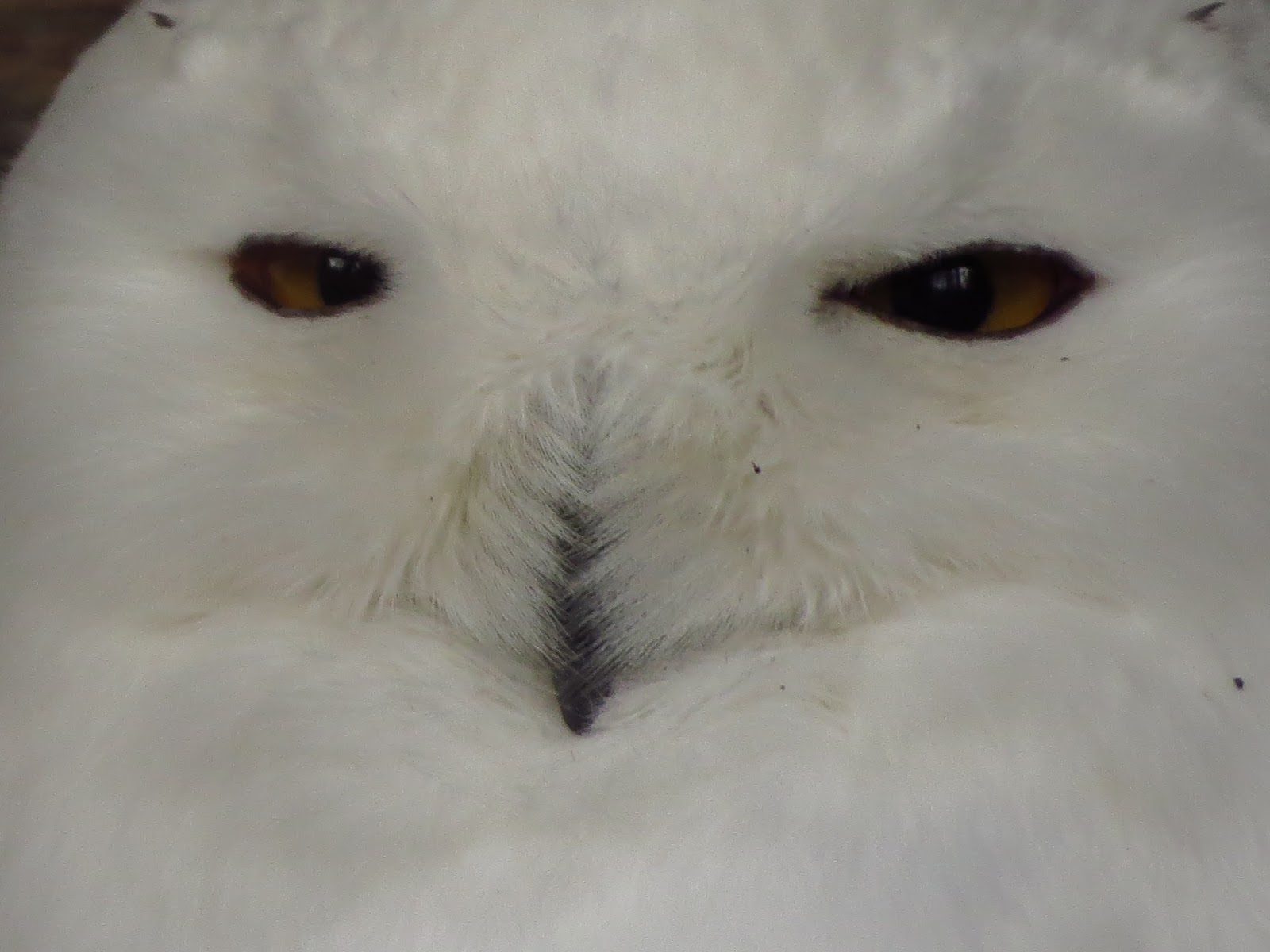
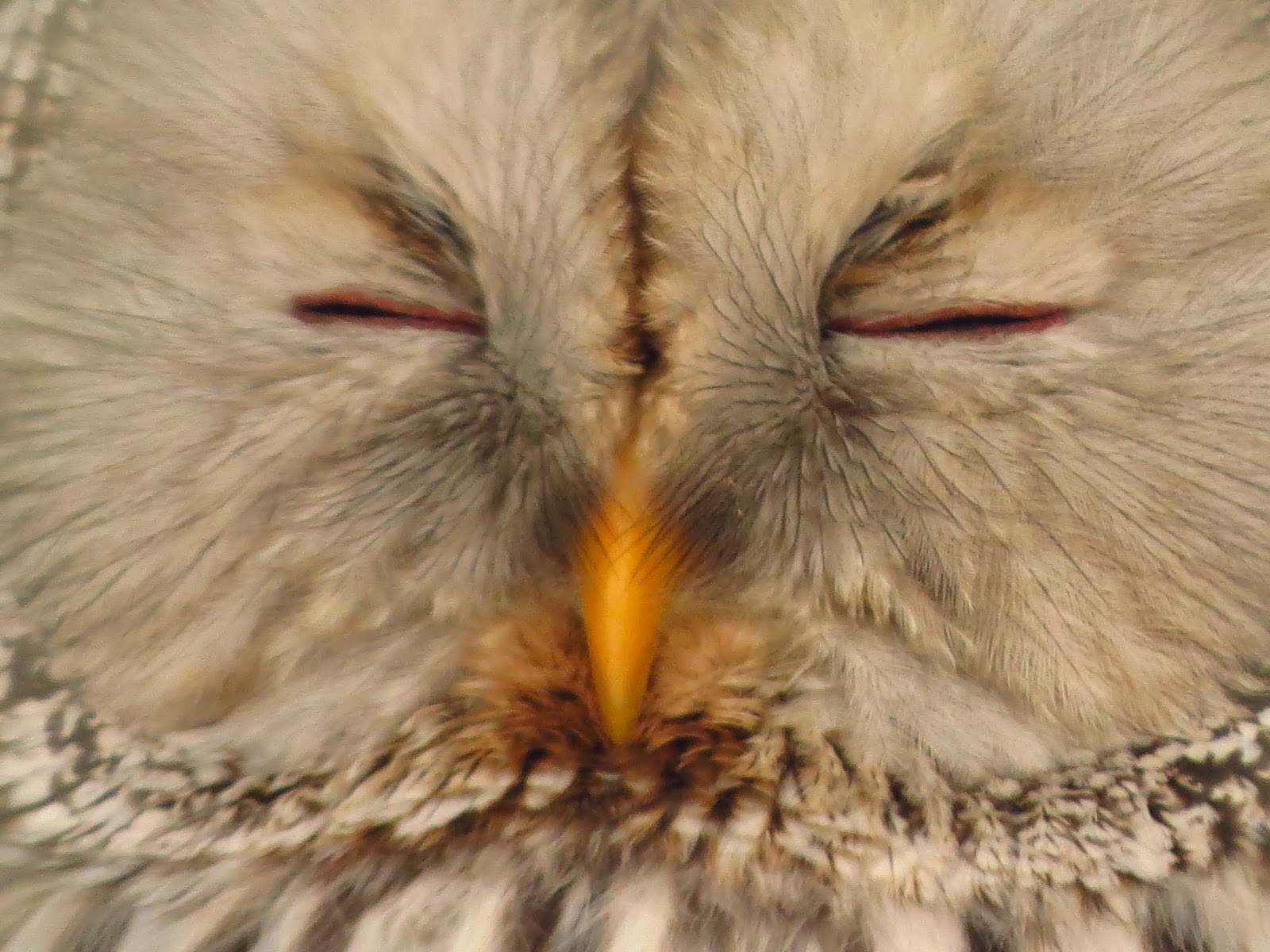
 A winter visit where there is a thrill around each corner; harvest mice so close we can watch them feed and wash their tiny paws; owls of many different species and size from eagle and snowy owls to little and hawk owls.
 
There are roe deer almost close enough to stroke, a running bison, Scottish wild cats with wild eyes, pine martins, wallabies, parading wolves through dense conifers and otters, lots and lots of otters. All of the animals look amazingly healthy and are excitedly active. 


To be honest I am not a zoo person, preferring my nature experiences to involve wild animals but I take my hat off to the staff and set up of this wonderful park. Personal favourites from the visit? Two giant otters from South America, immense otters with amazing character and voice. The ultimate experience was seeing the European lynx on a platform sitting upright in front of us, incredible animal. I may not see all of these superb animals in the wild but I will always treasure the afternoon memories of my visit here.


Monday, 8 February 2016

Gales, Rain, Birds and Birders

The Weekend 6th & 7th February 2016

Saturday - very strong gales, 55mph plus, heavy rain

Out into the gale, the quest is for the ferruginous duck that caused me such a problem last year. I arrive at Kingfisher Pool and am immediately cheered by the view over the pool. Gone is the thick ivy covering of the wire mesh fence and instead looking across the water is easier despite trees between me and the birds. Another local birder has been searching for the duck also. Tim hasn't found it but I do. The fudge is out in the middle of the pool drifting left. I try to get Tim's telescope onto it but I can't get it to focus through the mass of branches and twigs. I look again and the bird has drifted off. I can't see it. I am frustrated. Will I get a photograph of this bird or not?
I start scanning again and find it again sitting beneath the bushy island; the same one that it had hidden under for hours last year. I watch it, photograph it and video it.
Tim is happy with the views and leaves me to watch it more. It starts to dive for brief moments.
I move off, pushing the bike along the footpath and back to the main road. There's a thought in my head that the gale will bring down a branch onto my head.
Into the hide at Iblsey Water, a group of four lady birders are there and together we bird, finding a close black-necked grebe. One of the ladies finds a yellow-legged gull close by on a spit. Boom, boom, boom another one on the list.

To the nearby visitor's centre and to the hexagonal hide, the birds massed outside the darkened windows are mostly siskins. With them are a couple of bramblings and lesser redpolls, nuthatch and, more numerously greenfinch, blue, great, coal and long-tailed tits, blackbirds and chaffinches with a few reed buntings. There's one open window where three photographers are chatting in the language of the photographer; isos and shutter speeds, records shots and memory cards. One of them comes over to watch the birds near to me and we start to chat. He asks if I am The Biking Birder and I find it confusing when he says that people ask him whether he is also. I ask his name. “Gary, with two r s.” What's your surname? I can't believe my ears. Garry spells it . . . P r e s c o t t !

Once my disbelief is dispelled we laugh at the coincidence. This is the first Garry Prescott I have ever met. I knew there were others but meeting one is special, especially as he is a birding photographer. Absolutely brilliant bloke.
Back to the Iblsey Water hide with the weather getting worse. Two brilliant birders are already in their scanning incoming gulls with scopes, Alan and Lee. Lee points out a bird on top of the osprey pole on the far side of the lake, an Egyptian goose. I have totally forgotten about this bird knowing that they are a definite see in East Anglia.
Alan is a big World bird lister with a World total of over 8,000. He tells me of a weekend where he twitched a bird, a pochard species in Japan. A flight, a plane and a bus, see the duck and return. The World's highest carbon expenditure for one bird? Possibly. We are different sides of the same I Love Birds coin.
Lee comes up trumps again when he finds the last of the three target birds for the day, a first winter Caspian gull. Thanks to these two wonderful birders I now have four new birds for the year list despite some of the worst weather of the year.
The cycle into Ringwood is tough, gale in the face, darkness and rain, spray from passing cars. No problem. Now on 154, things are good.

8.26 miles 144 feet elevation up 145 feet elevation down

Sunday sunny light SW AM, heavy rain, fresh SW PM

Into the New Forest, I search open moorland first then deep into woodland seeing common birds such as redwing, titmice, great spotted woodpeckers, nuthatch and treecreeper.
A text tells me that a great grey shrike is near Beaulieu Road Station and I arrive there within an hour of cycling. The bird is down west of Pig Bush car park and I have to push the bike along a very muddy pathway to get to a ridge that overlooks the area. I can see the shrike some distance away and carry on along the path down to where three birders are just leaving having had great views of the bird. 

Another birder is walking close to the shrike to get a photograph. He flushes it and it flies away over a high fence and for a couple of hours I search before deciding to try for hawfinches elsewhere. As I start the big push back to the road I see the shrike has returned to a few low bushes but still a long way away. Rain starts to fall and gets heavier as I cycle to the house of two wonderful friends, Kerry and her son, Dominic. An evening with great friends is a delight. Dominic is an incredible young naturalist and their house is a fantastic smorgasbord of books photographs, artefacts from around the World and artworks. It's fabulous and every way one turns there is something to delight, amuse and wonder. Autographed photographs of David Attenborough, Chris Packham and Kate Humble, amongst others, shows how Dominic's commitment to wildlife has brought attention to this superb young man. We have a wonderful evening.

29.89 miles 1222 feet elevation up 1240 feet elevation down


Year list now at 155, twenty one ahead of this time last year.

Sunday, 7 February 2016

Rain, Mist, Distance, A Tick and a Dip

Friday 5th February fresh to strong SW rain all AM, cloudy PM

Over to Studland beach to look for black-necked grebes in drizzly rain and mist. I arrive at the middle beach car park and am astonished to see over eighty Mediterranean gulls here. Around twelve years ago when I lived in Swanage it was always good to see one Med' gull. Here was a flock of them of all ages too.
Looking out over a misty, calm sea I can just make out a distant group of six black-necked grebes, bird number 150 for the list.

Wanting to look in the famous WW2 bunker used by Churchill and Eisenhower, Montgomery and Mountbatten to oversee D-Day landing practise on the beach, I walk around to it and further to try and get closer views of the grebes. The rain gets heavier and the views are still poor.

Next stop is Wareham Forest which I reach within an hour. A great grey shrike has been seen sporadically near Strawberry Hill enclosure but I cannot find it and neither can two Dorset birders looking for the same.
I need to cycle over twenty miles to Ringwood in order t be there for an early morning start at Blashford Lakes and the rest of the afternoon and early evening I spend doing so.

Year list now at 150, twenty ahead of this time last year.


45.95 miles 2035 feet elevation up 2097 feet elevation down

Friday, 5 February 2016

Frisky Foxes (!) and Swanage Friends - a Barn Owl too.

Wednesday 3rd February fresh SW sunny intervals, 14C

Early morning at Middlebeare, two foxes are well and truly stuck after their night of passion. For two hours they stand back to back, occasionally struggling to separate and snap at each other but to no avail.
Three spoonbills are out in the channel and a barn owl flaps past moth-like.

As for the foxes, I am videoing their predicament when suddenly they're free. The larger of the two just sits looking exhausted. The smaller one jumps around and dashes a few yards left and right before rejoining the partner for some gentle jaw open sparring.
In all my many years of watching nature I have never seen this before, an eight-legged foxy pushme-pullyou.

To Swanage after looking over for hen harriers with no luck I cycle. Through the village of Corfe and along the undulating road I cycle and go to a very dear friend, Perry's house. Unfortunately she isn't in and so I leave a message on the door and start to explore the old places I loved here back when Swanage was our home.
Around to Peveril Point and the plaque to the husband of Perry, Gordon Barnes, who died almost ten years ago. Gordon was the closest friend, other than my last wife, Karen, that I ever had. Gordon was born in Birmingham, like myself, yet in 1960 this young man became the assistant warden at the Fair isle Bird Observatory. He then became a crofter on that Fair Isle before leaving there in 1975 to sheep farm in Wales. I met him in Swanage, at Peveril Point, after he and Perry had retired from their third farm, a mixed farm in Devon. I photographed the bike with Gordon's plaque.
A phone call from Perry and a quick cycle ride to her house to spend an afternoon looking at Gordon's Fair Isle notebooks; notebooks that detailed incredibly rare birds that he's seen there. Page after page of his notes and drawings, list after list of birding seen, birds ringed and even one list detailing birds oiled by fulmars.
Hermit thrush, white's thrush, great bustard and a bird for which there is only one British record, great black-headed gull or Pallas' gull. A needle-tailed swift page even has a sharp needle tail feather stuck to the page!
Perry had a present for me for days when it may be a bit chilly cycling, a lovely pair of alpaca wool gloves. The afternoon goes quickly and Perry phones another of my best friends, Pete Barratt, to warn him that I am here. A meal at our favourite Bangaldesh restaurant is arranged for the evening.
The meal is as delicious as ever and the conversation is about lost spouses and wildlife, holidays and birding. Pete had been out to Georgia, near Azerbaijan, last year birding and had also driven out to Sweden.
The evening finishes back at Perry's house looking through photographs from the happy days when both Gordon and Karen were alive and the five of us used to spend so much time together. Photographs of sitting in the garden on hot summer days, the best photograph to me is of an alpine swift flying in front of my friends standing in a row along a cliff edge above Peveril. What a bird and oh, what happy days.

Year list still at 149, twenty ahead of this time last year.


14.76 miles 776 feet elevation up 659 feet elevation down

Arne, Dorset. A Wonderful RSPB Reserve and another bird for the year list

Wednesday 3rd February fresh to strong W sunny intervals, 9C

The cycle ride from Weymouth to Arne is a delight with a strong wind at my back and empty roads with high quality tarmac. It is going to be a great day; I can feel it in my bones.
I feel excited as I approach Arne along a lane from Stoborough. This is one of my top five favourite RSPB reserves with beautiful heathland and woodland habitats beside estuarine arms of Poole Harbour, the World's second largest natural harbour.
After having cycled through some thick smoke coming from an area being cleared of old conifers, more restoring of the original heathland habitat, I reach the reserve and go to the small visitor's reception block. There I meet Luke and Chris, RSPB staff and soon, after stowing the bike away safely, I am off speedily walking to an area where I am hoping to see my first target bird of the day, Dartford warbler.
Reaching the area of thick gorse, the exact place where I saw dartford warbler last year, I search and listen for this superb small bird. The wind is still very strong and after an hour or so I still haven't seen or heard one.
I stand near to some gorse that looks particularly suitable and take out a chocolate bar for lunch. Then I hear something; a small, scratchy sub song. It sounds as if it is coming from quite a way away. I am therefore very surprised when a male dartford warbler pops up out of the gorse about ten feet away. It moves unconcerned by my presence amongst the gorse for a few minutes. 

Then a female pops her head up too. I get such fantastic views and so close as I stand stock still and watch them exploring the gorse.
New bird for the year and the important one from the three target birds for the day, as there would have been only be a few opportunities of seeing one, being restricted to the heathlands of mostly Southern England. No matter, it is on the list. Brilliant.
I walk down to the small cliffs from where one can look over to Long Island and beyond to the ferry crossing at Studland. The tide is receding and four spoonbills are quite distant out on the mud that starts the Middlebeare channel. There are also a fair number of avocets and curlew here. In the distance to the south I can see the famous ruins of Corfe Castle. This was blown up by Oliver Cromwell in the English Civil War after he captured it from the Royalist army. I take a photograph as a flock of Brent Geese are flying in front of it.

Through the large woodland and along the side of some large fields, a sign of how benign this Winter is is that there are no Winter thrushes on the grass and no finches either. Usually in a normal, cold Winter there would be hundreds of both.
Also missing are the large herds of Sika, a specie of large deer. They have obviously been culled to protect the habitats.
Back to the Visitor's Centre, which is soon to be replaced by a much larger one, hopefully by Easter, I meet Rob. Now Rob is another RSPB staff member and last year we had a fabulous day birding Arne together.
I head off for Middlebeare where the National Trust has a hide that overlooks the other end of the Middlebeare Channel from where I was earlier in the day. This sued to be one of my favourite birding places when I used to live in nearby Swanage and holds great memories for me. I haven't been here for around ten years and I am surprised at how high the trees have grown around the hide. The view across the muddy channel looks the same though with the curling dyke down the centre viewable because of it being low tide. I am hoping a hen harrier will go past and that the resident barn owl will put in a showing.
By dark neither have been seen but there have been a number of spotted redshanks and spoonbills. Little egrets and brent geese so life is good.


Year list still at 148, nineteen ahead of this time last year.


27.87 miles 1187 feet elevation up 1210 feet elevation down

Wednesday, 3 February 2016

Hill after Hill to get to an American Duck

Monday 1st February          fresh to strong W     sunny intervals,                                                                   occasional light rain 13C

There is a report of a green-winged teal at Seaton, Devon which is around twenty miles from where I am at present. With the bike ready I start the cycle. This part of Devon is very hilly and the day seems to be one long push up steep hill after steep hill and the going is tough and exhausting.

Through Budleigh Salterton, through Sidmouth and after a particularly steep and long hill climb, I reach a main road with a turn off for Beer.
Unfortunately a lack of road signs takes me down to Branscombe from which to get back on the right road for Beer there is yet another steep hill.
Beer, I find the youth hostel there and leave the panniers and sleeping bag. With an unladen bike the ride over to Seaton is not that bad and I find the reserve upon which the rare American bird has been seen.

A birder carrying a telescope comes up to me saying that we met on Shetland back in 2010. His name is Tony and together we search for the teal. I find it whilst peering through some tall reeds. Great, green-winged teal goes onto the year list, yet another really good bird; a great start to February.

Year list goes to 147, eighteen ahead of this time last year.


18.66 miles 1993 feet elevation up 1869 feet elevation down

Monday, 1 February 2016

Last Day of the First Month - Exmouth

Sunday 31st January fresh to strong W cloudy AM sunny intervals PM 13C

The final day of the first month starts at Bowling Green RSPB reserve near Topsham. Waders in large numbers are coming in from off the estuary as high tide approaches. Black-tailed godwits number around 800 with a few bar-tailed with them. There are also a couple of hundred avocet and smaller numbers of dunlin and redshank. They all take off together when first a sparrowhawk flies along a hedgreow and then a female merlin does likewise.

I still need to find the Bonaparte's gull and with the weather nothing like the heavy rain forecast I cycle to Exmouth. Along the way another cyclist, Max joins me and we cycle together for a couple of miles. He talks of his job and of his two young children.
I spend a few hours along the seafront in Exmouth checking every gull as the tide recedes.

There are very few gulls though and around 4:30pm I head off for a nearby country hostel. Reaching it I am greeted by two Midlanders acting as managers of the complex. One has a coffee in her hand which is in an Aston Villa mug, my own football team sadly.

11.12 miles 497 feet elevation up 430 feet elevation down

So the day ends. Monthly statistics:-

Green Year list 146 birds
Number of birds not seen in 2015 3
Mileage 723.56 miles
average mileage on days cycled 27.83 miles
elevation up 40,184 feet
elevation down 40,344


best birds :

great white egret x 10
hoopoe
grey phalarope
lesser scaup
cattle egret
glossy ibis
American wigeon
smew
Red-necked grebe
great northern diver x 22
Firecrest  x 2
Black-throated diver x 6
Ring-billed gull
Rose-coloured starling
slavonian grebe

A Wader and An Owl, Exe Estuary, Devon.

Saturday 30th January fresh W sunny, short shower PM

To Teignmouth seafront and a search for the Bonaparte's gull I missed earlier in the month first today. The tide is high and the sun is shining; such a contrast to yesterday.
No sign of the gull, lots of herring gulls.

Same again at Dawlish, I continue to Dawlish Warren and after seeing nothing other than two great-crested grebes and a single great northern diver on the sea, I continue around to the bay by the hide. Waders are still roosting there due to the high tide and amongst a fair number of oystercatchers and curlew are some bar-tailed godwits.
I walk all around the point opposite Exmouth and back along the beach, picking up plastic rubbish as I go.
Golden syrup on chips, actually quite nice, are bought from Chippy Chaps Fish Bar by the railway tunnel and eaten for lunch. An unusual combination I know but it seems to work when vinegar is added.
stonechat
Along the excellent Exe Estuary cycle path once more, the weather is beautiful if a bit colder than of late. Just north of Exminster Marshes RSPB reserve's car park I see a woman with raised binoculars on the pathway above the level of the cycle path. I ask here if she has seen the reported short-eared owl and she tells me that it is in the field in front of us. The bird is obscured by a large hawthorn bush from my view but I soon have a sight of it.

The woman's name is Helen Hawke and she asks me how I am getting on as she saw me on Springwatch last year and knows of my quest. She asks a young coouple to take a photograph of us both and puts some money as a donation into the charity box. Thanks Helen.

To Matford Marsh RSPB reserve next but I can't see the dodgy small Canada goose. I had been warned that it is difficult to see as it stays amongst the bullrush and sedges.
Late in the afternoon I reach Topsham and Bowling Green RSPB reserve. The water level of the pools in front of the hide is a lot lower than when I was here previously and duck numbers are reduced.
As darkness falls I nsider how superb the Exe Estuary is for Green Birding. It has a superb cycle track around it's perimeter, some fabulous RSPB reserves with masses of birds, particularly brent geese and waders, the latter amass at Bowling Green when the tide is high. Then there is Dawlish Warren and it's dune system and the sea. Nearby there are woodland and hedgerows with cirl buntings amongst the commoner birds. Altogether it is the perfect area for a great day cycling and birding.

The Green Year list now stands at 146, seventeen more than this time last year.


21.69 miles 905 feet elevation up 884 feet elevation down

DONATE to The RSPB and Give a Pin Badge to a Rwandan Child

RSPB Pin Badge JustGiving Donation Page   As part of my tenth Biking Birder adventure, BBX Rwanda 2026, I am trying to fundraise for the RSP...